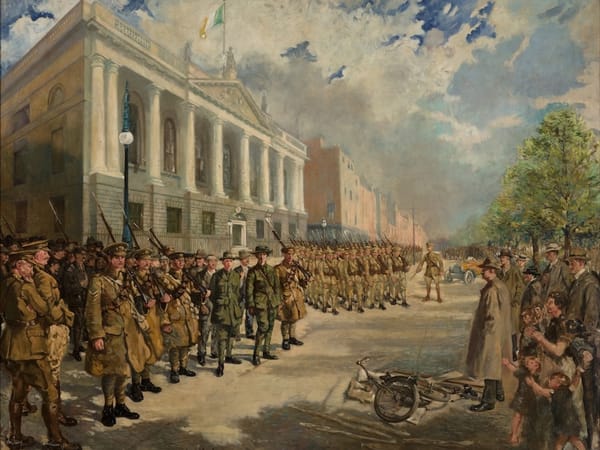
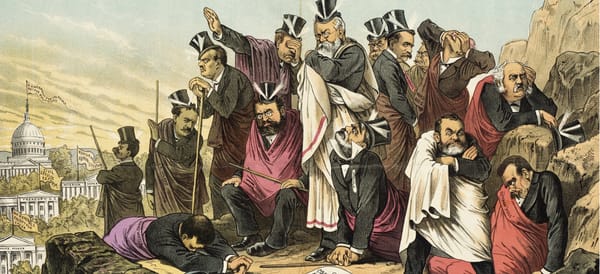
In light of the centenary of the founding of Fianna Fáil, Nathan Hutchinson analyses Micheál Martin’s historical revisionism, arguing that the party’s appeal to history reveals the sharp divide between the historical ideals of Irish independence and their governance.
Diving into the ongoing national debate, Niall McGann addresses the Irish Left’s approach to neutrality, taking aim at the positive myth of UN Peacekeeping.
Reflecting on the victories of Catherine Connolly and Zohran Mamdani, June Kelly analyses the Irish constitutional order and how its hegemony suppresses the fostering of class protagonism.
Bernie McAdam offers a critical review of Alan Woods’ book on Republicanism, arguing that the book’s issues are downstream of the economism of Ted Grant’s Militant tendency.
Niall McGann responds to Jack Ó hAimhirgins recent article in ForwardCYM arguing against notions of Lexit and for an international road to socialism that sees the Irish and European workers smash the EU, replacing it with a Workers Republic.
Nathan Hutchinson analyses class reductionist politics and its most recent proponent on the Irish Left, László Molnárfi, arguing that the true movement of Liberation is one grounded in the reality of the working class as multinational and diverse.
June Kelly analyses the Second International, the United Left Alliance, and today’s ‘islands of struggle’ to argue for a mass socialist party model built on a common programme.
Niall McGann reviews Paul Lynch’s award-winning novel “Prophet Song”, arguing that the novel successfully captures the sense of a world amid major upheaval and collapse but suffers from a lack of clarity in explaining why and how fascism arises.
Bernie McAdam, People Before Profit activist and member of the League for the Fifth International, discusses Left Government and the transitional programme.
Niall McGann argues for party democracy, and for the rank and file party members right to have control over their leaders and the full timers their parties hire.